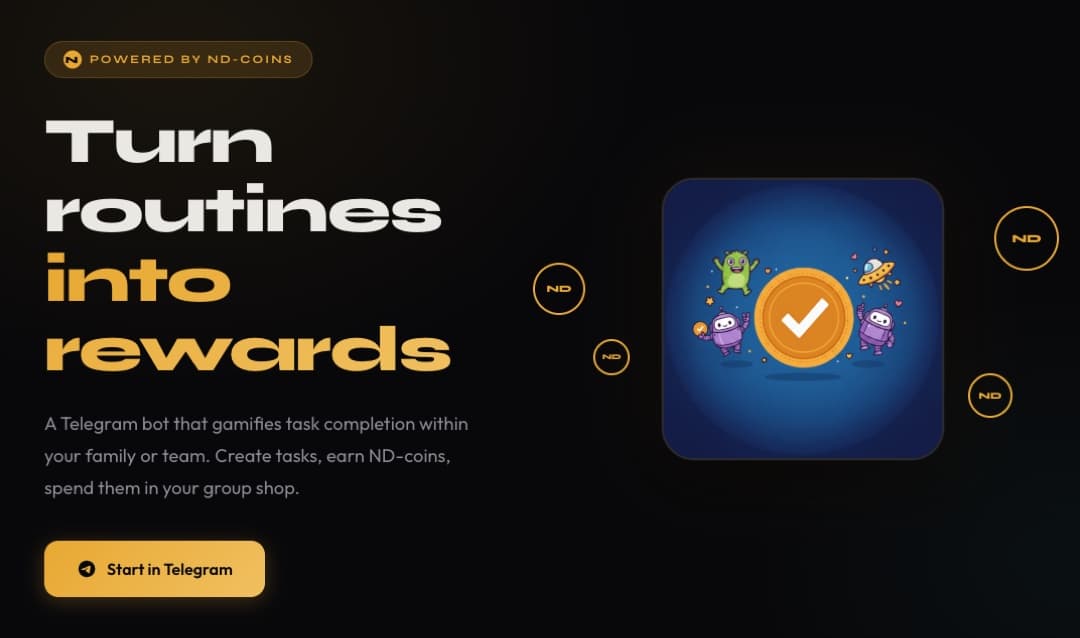
A shared to-do app has never once done my dishes. It tracked them. It reminded me. It let someone tick a box. But the chore still piled up, because the same person kept stepping up while the free-rider coasted, and there was no record either way and no reason for that to change. The list was never the problem. The missing piece is stakes, fairness, and a payoff - a clear reward for doing the task, a small cost for dropping it, a record everyone trusts, and something worth earning at the end. NextDone is a Telegram bot that adds exactly those, and turns the unglamorous shared work into a game your group actually plays.
A checklist tracks what, never why
Getting a group to reliably do the boring stuff is hard, and it has almost nothing to do with effort. Chores pile up because nobody remembers whose turn it was. "I'll do it later" quietly becomes "nobody did it." Checklists make this worse by looking like a solution: they record what needs doing and who ticked the box, but they offer no motivation, no fair way to credit the person who did the work, and no payoff for showing up. They answer "what" and never "why."
NextDone is built around a different loop, one that lives entirely in Telegram with no app to install and no account beyond the one everyone already has. Admins post tasks worth ND-coins. Members claim them, do the work, and submit proof. An admin reviews and pays out, or applies a penalty. Coins accumulate on a shared leaderboard and get spent in a shop the group stocks itself. It is closer to a small economy than a to-do list.
Stakes, fairness, and a payoff
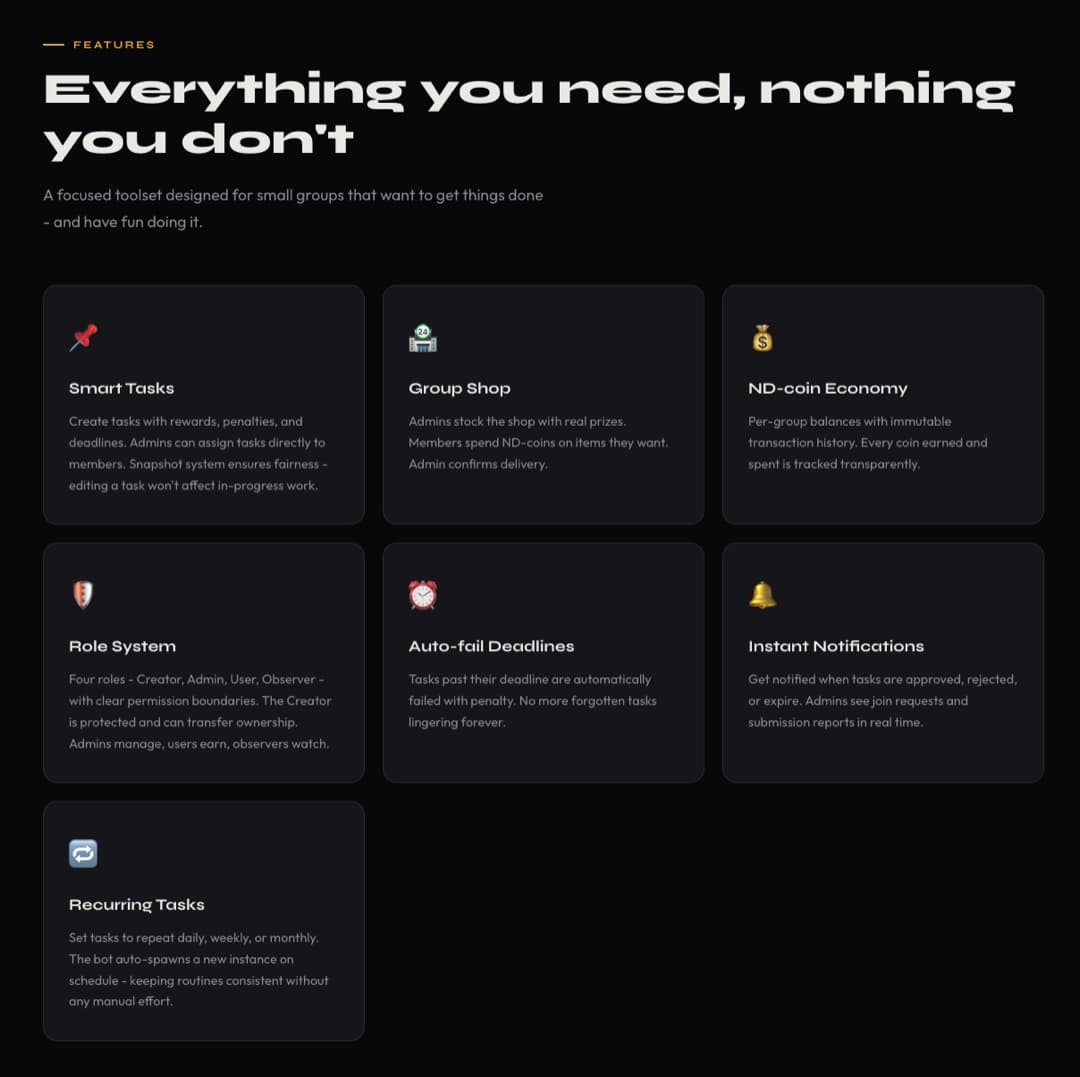
Every task in NextDone carries real value. An admin sets a title, an optional description, a reward in ND-coins, an optional penalty for failure, and a deadline of a day, a week, a month, or none. A member takes a task from the available list or gets assigned one directly, and the reward, penalty, and deadline are locked in at that moment - later edits never change work that is already underway.
The coins are the point. Each member has a per-group balance: coins earned in one group stay in that group's economy, they are docked on a penalty, and a balance can never drop below zero. A group-wide leaderboard turns routine into friendly competition, so doing the work is not just responsible, it is visibly rewarding. And because every group runs its own shop - screen time, a night off chores, a real-world prize, priced by the admins - the coins actually mean something. The shop only deducts coins once the admin confirms the reward was delivered, so nobody pays for something they never got.
Proof beats "trust me"
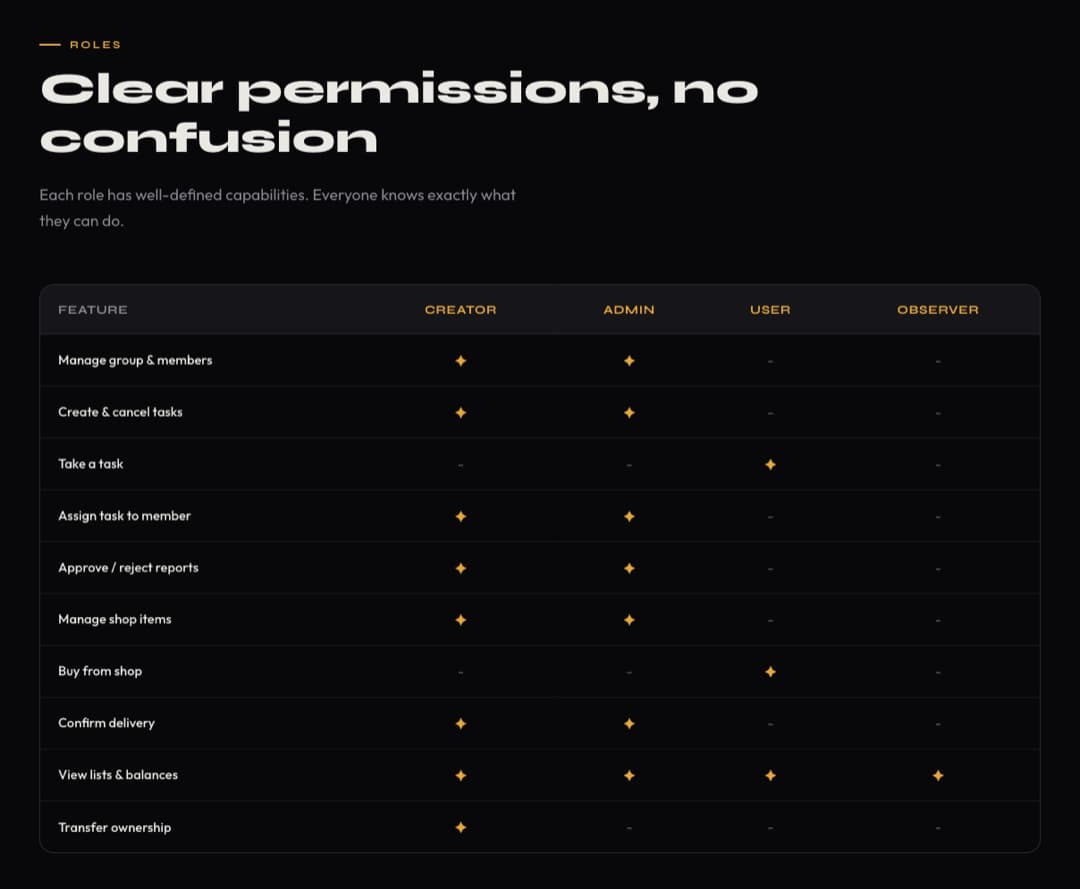
Motivation without fairness just rewards whoever shouts loudest. NextDone is fair by design. Four roles keep things orderly: a creator who owns the group, admins who run it, members who do the work, and observers who only watch. Joining is by invite code, approved by an admin at the role they choose, so a group is never open to the public.
Completion is never taken on faith. A member submits a report plus optional photo, video, or document proof, and an admin approves to pay out or rejects to apply the penalty, with a feedback comment either way. Every coin movement - reward, penalty, purchase - is written to an immutable transaction history each member can review. There is no "I swear I did that," because the record settles it.
Routines that run themselves
The chores that matter most are the ones that come back: dishes, the weekly cleanup, the monthly report. NextDone handles those as recurring tasks - set one up once, choose daily, weekly, or monthly, and it spawns a fresh instance on schedule with the reward reset every cycle, so the incentive never wears off and nobody has to remember to re-post it.
Deadlines are real, too. A task left unfinished past its deadline is automatically failed and its penalty applied, with no manual chasing. The right person gets pinged at the right moment - admins about join requests, submissions, and shop orders; members about approvals, assignments, and results - and every notification carries a one-tap button to jump straight to whatever needs attention. The repeating work flows on its own, and nobody has to play reminder.
The rules run themselves
Fairness only holds if the system enforces it, not whoever happens to be paying attention. So the awkward parts are handled at the database level, on a schedule, rather than by someone remembering to run them.
// overdue work fails on a schedule, not when someone notices
const sweepOverdue = sql`
  update tasks set status = 'failed'
  where status = 'in_progress' and deadline < now()
`;

// a penalty can sting, but a balance never goes negative
const applyPenalty = sql`
  update members
  set coins = greatest(coins - ${penalty}, 0)
  where id = ${memberId}
`;
A scheduled job sweeps overdue tasks every few minutes and applies their penalties with nobody chasing anyone. A recurring template is guaranteed exactly one live instance at a time, so a daily chore never quietly stacks into five. And because every balance is scoped to its own group, the same person can run a household, a study group and a team side by side without their economies ever touching. The result is a game whose rules cannot be argued with, because none of them depend on trust.
NextDone lives here (opens in a new tab). If you have ever lost an argument about whose turn it was, or want to talk about where game mechanics belong in real life, LinkedIn (opens in a new tab) is the fastest route.